


What the World Couldn’t See
From the outside, my life looked like it had unfolded exactly the way it was supposed to.
I was the small-town beauty queen who moved to the big city of Pittsburgh.
I built a career.
I had a family.
I created beautiful things, showed up for people, kept moving forward and,
by most appearances, had built the life I was supposed to be grateful for.
And I was grateful.
But somewhere underneath all of it, I knew something was wrong.
Meet Wendy Jean

ReThink
ReLeaf

At first, I couldn’t explain it. I saw shifts, noticed patterns, and my photographer’s eye documented things before I understood what they meant.
Even when I became sick, I rarely looked sick.
That may have been one of the hardest parts.
The outside of my life kept telling one story while something inside me was telling another.
Pay attention.
I didn’t have the science yet.
I didn’t have the terminology.
I didn’t know about functional genomics, environmental exposures, cellular stress, methylation pathways or why one person could encounter something and recover while another person’s body seemed to hold onto it.
I just knew my body was telling me something. And if you spend enough years living between what everyone else can see and what you can feel, you become very good at noticing things.
Patterns.
Contradictions.
The detail someone almost skips over. The part of the story that doesn’t quite fit.
Looking back, I think I had been preparing for my current work long before I knew it would become my work.
I Felt The Light Before I Could See It
I was the first person in my family to go to college.
I started in accounting and business at Penn State Behren
Then I changed direction.
I transferred into art and photography at Edinboro University of Pennsylvania.
That shift matters to me because art gave me a way to bring what I observed to life.
Photography made me pay attention differently.
Light. Contrast. Timing. Composition. Patterns. Chemicals. Sounds, Weather Patterns
The small change in a familiar scene that tells you something is different.
At 18, I became the Penn State Behrend Newspaper Sports & Event Photographer, my professor saw my talent and offered me a photo job on Lake Erie, and I took my moms place as the family photographer.
After college, I became a Professional Photographer, posing families, capturing community events and moments that mattered.
I learned how powerful it could be to maneuver the light and make it visible enough that someone else stopped and noticed it too.

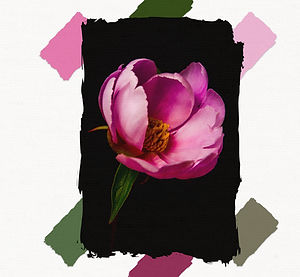

And over time, I started noticing other shifts.
Changes in my own body.
Changes in the environment around me.
Chemical exposures.
Patterns I didn’t yet have the science or language to explain.
I could feel that something was changing before I understood why.
That has happened more than once in my life.
First I notice.
Then I start asking questions.
Eventually, I find the language.
Since I was a child serious, life-altering medical issues touched my brother, my dad and my mom and my US Combat Veteran Grandfather died in the line of Duty as a Volunteer Fireman all before I was 11.
I didn’t have the capacity to understand the depth of knowledge then that I have now.
I was simply watching people I loved navigate things that could change a life.
And I was watching my mom. I watched her advocate. Ask questions. Show up.
Keep asking when something didn’t make sense. Pay attention to the details.
Speak up for the people she loved. I didn’t know then how much of that I was absorbing.

Years later, when my own health became complicated and my work moved into genetics, nutrition, environmental health and advocacy,
I began to recognize it.
The questions weren’t new.
Neither was the instinct to look closer.I finally had more tools, more science and more language for something I had watched—and felt—for years.
And that is where many of my decisive moments live.
Not always in the dramatic event itself.
Sometimes in the moment you notice the shift.
The moment you ask another question.
The moment you decide the obvious explanation is not enough.
The moment you look again.
Science Gave Me Better Questions
Genetics changed the way I understood health.
Not because DNA tells us exactly what is going to happen.
It doesn’t.
But it can help us understand why two people can experience the same infection,
medication, food, stressor or environmental exposure and respond very differently.
That fascinated me.
So I studied functional genomics.
Then nutrition.
Then environmental health.
Then the pathways involved in inflammation, detoxification,
methylation, nutrient needs, neurotransmitters,
stress response and cellular function.
One rabbit hole became several.
And suddenly, things I had felt, photographed, questioned and
lived through had another layer.
Science gave me language for what I had been observing.
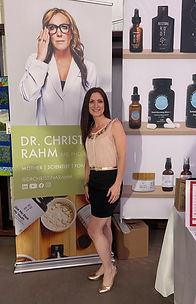

Today, my training includes functional genomics, holistic health coaching, and functional nutrition.
But the part that matters most to me is not the letters after my name.
It is what all of that information allows me to do: see the person more completely.
I Never Loved the Word “Survivor”

Someone once asked me why.
I had to think about it.
Because technically, I am one.
I have survived illness.
I have rebuilt parts of my life.
I have lived through seasons that changed me permanently.
I lived through the 80s streetlight dinner bell. Survived a 100-session day at JCP Portrait Studio!
But survivor always felt like it put the emphasis on what had already happened.
I have always been more interested in the moment that comes next.
The moment the baby starts to smile, the light begins to peak, the game winning score, the shift, the moment when you realize something isn’t working anymore.
The lab that changes the question.
The exposure no one thought to ask about.
The family pattern that suddenly makes sense.
The moment you stop dismissing what your body has been telling you.
The moment you choose differently.
Those are the moments that fascinate me.
The small, decisive moments that quietly change the direction of a life.
I’ve had plenty of them.
And now I tend to notice them in other people too.


This Is Where My Work Lives Now
My work sits at the intersection of genetics, labs, nutrition, environmental health, chronic and complex illness, technology, advocacy, practitioner collaboration and education.
That sounds much more complicated written out than it usually feels in real life.
Most often, someone tells me their story. I listen. I ask questions.
We look at what they already know.
Then we look at what still does not make sense.
And somewhere along the way, I will usually say: “Wait. Go back to that part.”
Because sometimes the detail someone almost skips is the detail that changes the conversation.
Most People Don’t Need More Information
By the time many people find me, they already have plenty.
Labs. Reports. Specialists. Supplements. Protocols.
Podcasts. Screenshots. Research.
A heroic number of browser tabs.
What they often do not have is someone helping them understand
how all of those pieces relate to one another.
That is the space I naturally work in.
The Bridge Between The Pieces.

I Love Working With Practitioners, Researchers & Collectives, Too
Some of my favorite conversations happen when a practitioner is working through a complex case and I see their expression change and suddenly say,
“Now I see it.”
I enjoy helping practitioners use genetics, AI and emerging precision-health tools without losing the human being underneath all of the data.
A dashboard can be useful.
A genetic variant can be useful.
A lab result can be useful.
But none of those things have lived the person’s life.
The person has.
Context matters.
Art, History and Science Have Always Been Part of My Life
Art, history and science have always played a part in how I understand the world.
I studied art and art history because I was fascinated not only by what people created, but by why they created it, what was happening around them and what their work revealed about the time they lived in.
Photography gave me another way to document that.
Science eventually gave me another way to investigate it.
To me, they aren't opposites.
They are different ways of looking closely.
Art asks me to observe.
History asks me to understand context.
Science asks me to question, test and keep learning.
And photography taught me that where you focus matters.
Today, I might be looking at a photograph, a genetic pathway, an environmental exposure, a lab trend, a historical pattern or a sentence someone almost didn’t say.
The subject changes.
The instinct doesn’t.
Look closer.
That is also why I still create.
Sometimes an idea needs an article.
Sometimes it needs a conversation.
Sometimes it becomes an event.
And sometimes it needs to become something visual you can hold, wear or put somewhere you will see it again.
That is where the boutique fits.


The Boutique Is Another Kind of Storytelling


The Clicks for a Cause boutique isn’t separate from this work.
It is another way I bring an observation to life.
Some pieces begin with something I have lived.
Some begin with something I hear someone say that I cannot stop thinking about.
Some come from science.
Some from advocacy.
Some from humor—because after enough years inside complicated bodies and complicated lives, humor becomes its own coping mechanism.
And sometimes a few words capture an entire season.
Like Past Capacity.
There is a difference between being capable and having capacity.
I learned that one the long way.
That thought can become an article.
A conversation.
A shirt.
A mug.
A piece of art.
Because sometimes seeing the right words outside of yourself helps you recognize what has been happening inside of you.
I don’t want the boutique to simply be merchandise.
I want it to hold little pieces of recognition.
Things that make someone stop.
Laugh.
Think.
Feel seen.
Or simply say: That’s me.
Maybe That Is the Simplest Way to Explain Me
I notice things. Connections. Patterns. Shifts. Contradictions.
What someone says quickly and almost dismisses.
The difference between what something looks like and what it actually feels like.
And I have spent much of my life finding ways to bring what I notice into view.
Through art.
Through faith.
Through photography.
Through community and events.
Through advocacy.
And now through science, genetics and the work I do with people.
I don’t pretend to have every answer.
I’m very comfortable saying:“I don’t know yet.”
But I usually know when there is another question worth asking.
And sometimes one better question changes everything.

Today, I feel deeply blessed.
Not because everything became perfect.
It didn’t.
But I understand my story differently now.
I understand more about what my body had been trying to tell me.
I understand more about what I watched my family experience.
I understand why advocacy matters so much to me.
I understand why art never left.
And I can finally see how the things that once looked like completely separate chapters—
business, art, history, photography, publications, community events, illness, environmental exposures, family, science, genetics and advocacy—were becoming one body of work.
So if your story is complicated…
if you are trying to understand information that doesn’t seem to fit together…
if you are a practitioner looking at a case that needs another layer…
if you are curious about genetics, environment or emerging technology…
or if something I created makes you stop because you recognize yourself in it… you are probably in the right place.
I spent a long time feeling shifts the world couldn’t see. Now I have more ways to bring those things into focus.
Art. History. Science. Experience. Questions. Connection.
And the willingness to look again.
I see the decisive moments.
What brings you here today?
I have questions
✓ 15-30 Minutes
✓ Need direction
✓ Not sure where to begin
I have DNA results
✓ Review SelfDecode
✓ Review raw data
✓ Personalized strategy
I've been sick for a long time
✓ Lyme / Mold
✓ Autoimmune / Long COVID
✓ Environmental Illness
✓ Complex symptoms
I am a Practitioner
✓ Second Opinion
✓ Case Collaboration
✓ Functional Genomics
✓ Education